Dental
Dental implants in Turkey: cost & full guide (2026)
Medically reviewed by Dr. Elif Şahin
Quick answer
Dental implants in Turkey start from around £230 / $310 each (roughly €270). Compare that with about £2,000–£2,500 / $3,365 for a single implant in the UK. The lower price reflects Turkey's lower cost base: wages, overheads and the exchange rate, not cheaper materials. Your exact price is confirmed in a transparent, itemised quote after a proper assessment.
- From £230 / $310 per implant at SaluVista — final figure set by an itemised quote after assessment.
- All-inclusive packages typically cover surgery, hotel, transfers and interpreter support.
- Cheaper than the UK because of local costs and the exchange rate, using the same international implant systems.
- Treatment usually spans two stages with healing in between; suitability is confirmed by a scan.
In this guide
Lose a tooth and you notice more than the gap when you smile: it changes how you chew, how a few words come out, whether you cover your mouth in photos. Dental implants are the modern standard for replacing missing teeth, but UK prices put them out of reach for a lot of people, which is why thousands fly to Turkey every year, where the same treatment costs a fraction of what it does at home. This guide lays out the real numbers and what a package includes. It also covers choosing a clinic safely.
Treat it as background to help you prepare, not medical advice.
How much do dental implants cost in Turkey?
At SaluVista, dental implants start from £230 / $310 each (about €270). That's the entry point for a single implant. What you actually pay comes down to how many teeth you're replacing, which implant brand you go with, and whether you need extras like bone grafting or a particular type of crown. No two mouths are the same, so we don't stamp one headline figure on everyone and hope it fits, and you get a transparent, itemised quote once a dentist has looked at your case.
For comparison, a single dental implant in the UK usually runs £2,000 to £2,500 / $3,365, so even once you've paid for flights and a hotel, most patients come out well ahead. Combining implants with other work? Our guide prices are zirconium crowns from £190 / $255 per tooth and veneers from £320 / $430 per tooth. Worth knowing if you're planning wider smile work. For the bigger picture on Turkey pricing, see our Turkey vs UK dental cost comparison.
A note on very cheap quotes. If a headline price looks far below everyone else, ask what's excluded: the abutment, the final crown, follow-up, or the implant brand. A genuine quote is itemised so you can see exactly what you're paying for.
Dental implants: Turkey vs UK cost compared
| Turkey (SaluVista) | UK (typical private) | |
|---|---|---|
| Single dental implant | From £230 / $310 each | ~£2,000–£2,500 / $3,365 |
| Zirconium crown | From £190 / $255 per tooth | ~£500–£900 per tooth |
| Porcelain veneer | From £320 / $430 per tooth | ~£500–£1,000 per tooth |
| Full-arch options | Itemised package quote | Often £10,000+ per arch |
| Accommodation & transfers | Usually included | Not applicable |
| Interpreter support | Included | Not applicable |
UK figures above are broad market ranges to give a sense of scale, not SaluVista prices. If you're weighing implants against other options, our guide to dental implants vs veneers explains which problem each one actually solves.
What an all-inclusive package covers
The advertised implant price is only part of the story. What really matters is the total cost of the trip, and a SaluVista package is put together with that in mind. Nothing should catch you out once you land.
- Consultation & imaging — examination, x-rays or a 3D scan to plan the implant position.
- Implant surgery — placement of the implant post by your dental surgeon.
- Hotel accommodation — comfortable rooms for the nights you need to stay.
- Airport & clinic transfers — private transport between airport, hotel and clinic.
- Interpreter support — so nothing is lost between you and your dental team.
Your itemised quote also spells out whether the final crown or abutment is fitted on the first trip or after healing, since implants usually need time to fuse before the visible tooth goes on. Being upfront about that is part of honest pricing. Read more on our dental treatment hub.
Why are implants cheaper in Turkey?
The worry we hear most often is that a lower price must mean lower quality, but in reality, the saving comes down to where the work is done, not what it's made of. Reputable Turkish clinics use the same international implant systems. They follow the same clinical standards you'd expect at home.
Lower prices in Turkey reflect a lower local cost base: wages, clinic overheads, lab fees and the exchange rate, rather than lower-grade materials or shortcuts.
Turkey is packed with dental clinics and skilled dentists. That competition keeps prices sharp. What you still need to check is the specific clinic and clinician; a low national average is no substitute for the right person doing your treatment. Good clinicians follow the everyday oral-health principles set out by the NHS. In the UK, dentists are regulated by the General Dental Council.
The dental implant procedure, step by step
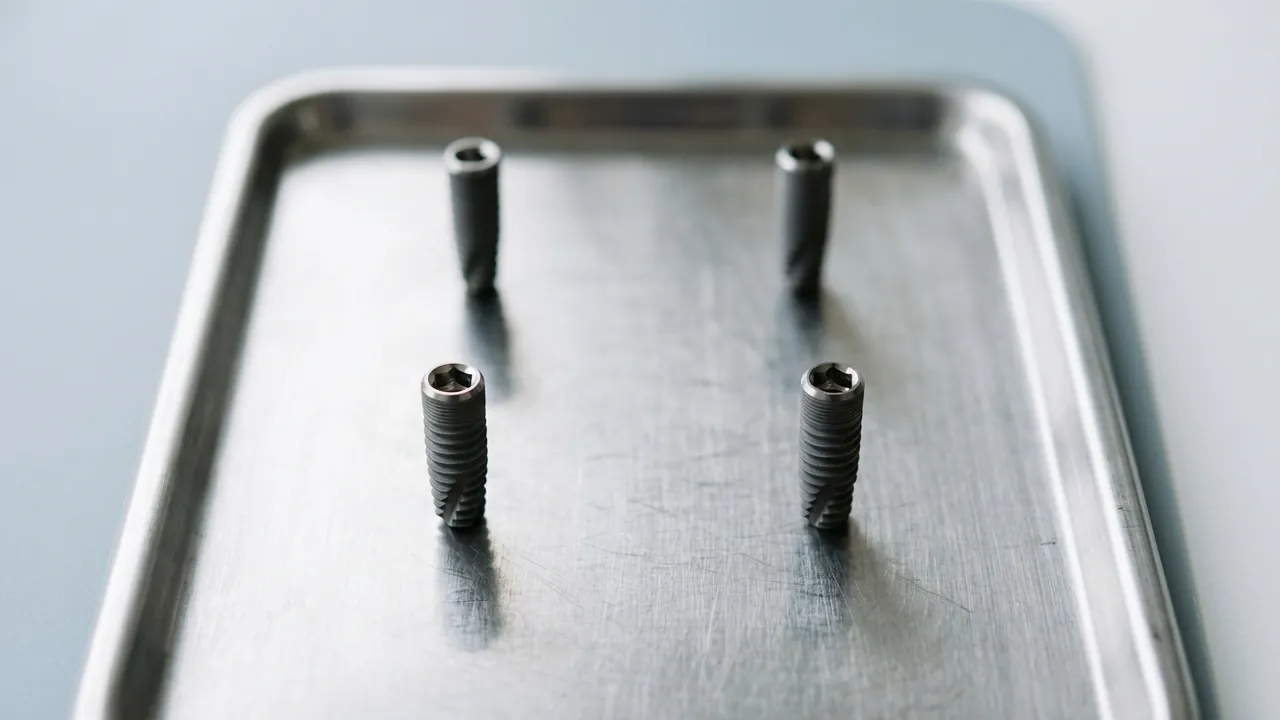
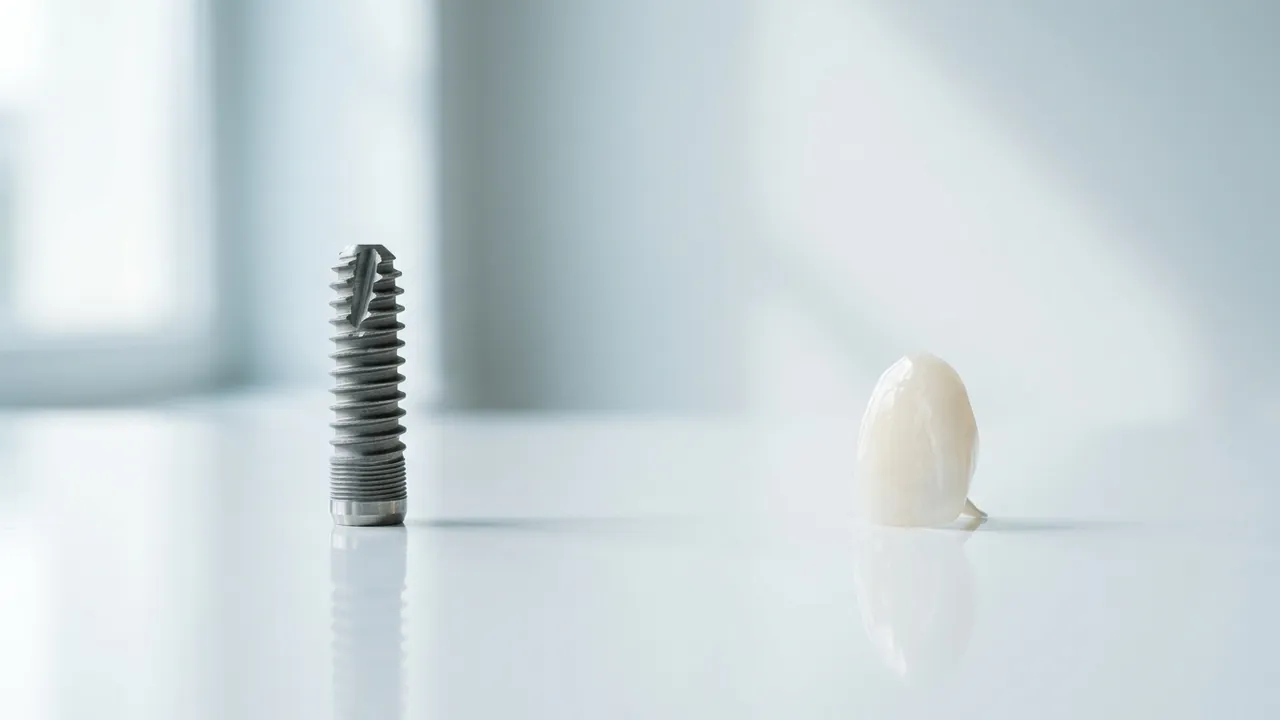
A dental implant is a small titanium post. It's placed into the jawbone to act as an artificial tooth root. A crown is then fixed on top. Here's how a typical two-stage journey unfolds.
1. Assessment and planning
Before you travel you speak with your dentist, and on arrival you have an examination and a scan that confirms you have enough healthy bone and maps exactly where each implant should go. If bone is thin, a bone graft may be suggested first.
2. Implant placement
Under local anaesthetic, the implant post is placed into the jaw. Most people find it more comfortable than they expect. Many say it feels like a tooth extraction.
3. Healing (osseointegration)
The jaw then needs around three to six months to heal, during which the bone fuses to the implant, and you usually go home during this period, often with a temporary tooth if the gap is visible.
4. Fitting the crown
On a second, shorter visit the abutment and your permanent crown are fitted, giving you a tooth that looks and functions like a natural one, and your dentist explains the exact timeline for your case, as some situations suit faster protocols.
Meet your dentist. SaluVista's implant care is led by Dr. Cansu A., an oral implantologist focused on implants and bridges. You speak with your dentist before travelling, and a qualified human makes the final decision on your plan.
Are you a candidate for dental implants?
Most healthy adults missing one or more teeth are suitable. But a few things affect candidacy:
- Enough jawbone to anchor the implant — grafting can sometimes build this up.
- Healthy gums — active gum disease is usually treated first.
- General health — uncontrolled diabetes or heavy smoking can slow healing and affect success.
A good dentist practises conservative care: they protect your healthy teeth and won't push irreversible work when a simpler option would do, and if a bridge, a denture or a single crown fixes your problem with less intervention, that belongs on the table too. Only a proper assessment can confirm whether implants are right for you. That means x-rays or a scan. Replacing several teeth? Our All-on-4 implants guide covers full-arch options.
Want to know your exact implant cost?
Send a few photos and details. A dentist gives you an honest, itemised quote, including whether implants or a simpler option suits you best.
Get a free assessment →Choosing an implant clinic safely
- Insist on a proper assessment. A scan and a treatment plan should come before any firm price, not after a deposit.
- Read the quote line by line. Check whether the crown, abutment, grafting and follow-up are included.
- Ask about the implant brand and aftercare. Established international systems have parts available worldwide if you ever need a repair.
- Talk to your dentist first. With SaluVista you speak to your dentist before travelling, and screening and booking happen in the app.
The American Dental Association's MouthHealthy resource is a helpful neutral reference on implants and everyday dental care. Worth a look as you compare options.
Frequently asked questions
How much do dental implants cost in Turkey?
At SaluVista, dental implants start from £230 / $310 each (roughly €270), with the exact price confirmed in a transparent, itemised quote after your assessment. The final figure depends on how many implants you need, the implant brand, and whether extras such as bone grafting or the final crown are required. A single implant in the UK often costs £2,000–£2,500, which is why many patients travel.
Why are dental implants so much cheaper in Turkey than the UK?
The lower price mainly reflects Turkey's lower cost base — staff wages, clinic overheads, lab work and the exchange rate — not lower-grade materials. Reputable Turkish clinics use the same international implant systems and follow the same clinical standards as UK practices. The saving comes from local costs, not corner-cutting.
What does an all-inclusive dental implant package in Turkey cover?
A typical SaluVista package covers the consultation and scans, the implant surgery, hotel accommodation, airport and clinic transfers, and interpreter support. Your itemised quote makes clear whether the final crown or abutment is included in the initial trip or fitted after healing, so there are no surprises.
Am I a candidate for dental implants?
Most healthy adults with one or more missing teeth and enough jawbone to anchor an implant are candidates. Uncontrolled diabetes, heavy smoking, gum disease or insufficient bone can affect suitability, though bone grafting sometimes helps. Only an assessment with x-rays or a scan can confirm whether implants are right for you.
How long do dental implants take in Turkey?
Implant treatment usually spans two stages. On the first trip the implant post is placed, then the jaw heals for around three to six months so the bone fuses to the implant. The permanent crown is fitted on a second, shorter visit. Some cases suit faster protocols, which your dentist will discuss.
How long does implant treatment take?
It usually spans two stages. On the first trip the implant post is placed, then the jaw heals for around three to six months so the bone fuses. The permanent crown is fitted on a second, shorter visit. Some cases suit faster protocols, which your dentist will discuss.
How long do dental implants last?
With good oral hygiene and regular check-ups, implants can last many years and often decades, but no dentist can honestly guarantee they will last forever. The crown on top may need replacing over time, and gum health and habits like smoking affect longevity. Looking after them well is the biggest factor.
This article is general information, not medical advice, and does not replace a consultation with a qualified dentist. Individual results, prices and recommendations vary. Always discuss your options and risks with a dental professional.