Dental
Dental implants vs veneers: the difference explained
Medically reviewed by Dr. Elif Şahin
Quick answer
Dental implants and veneers solve completely different problems. A dental implant is a titanium post placed in the jaw. It replaces a whole missing tooth, root and all, topped with a crown. A veneer is a thin shell bonded to an existing, healthy tooth. It changes the tooth's shape, colour or alignment. Implants replace teeth you have lost; veneers reshape teeth you still have.
- Missing tooth or gap? That's an implant (or a bridge). A veneer has nothing to bond to.
- Chipped, stained or uneven front teeth that are otherwise healthy? That's where veneers shine.
- Implants involve minor surgery and months of healing; veneers are quicker but usually remove a little enamel.
- Many smile plans use both, so replaced and reshaped teeth match in shape and shade.
In this guide
People often ask us whether they should get implants or veneers. It can feel like the two are rival routes to the same result. They aren't. The confusion is understandable. Both are ways to end up with a better-looking, better-functioning smile, but they answer different questions. One replaces a tooth that's gone. The other reshapes a tooth that's still there. Get that distinction clear and most of the decision makes itself.
This is general information to help you prepare for a conversation with a dentist. It's not a substitute for a proper assessment.
Different problems, different tools
The single most useful test is simple. Look at the tooth: present, or absent?
- Tooth missing (or about to be extracted): you need something that stands in for the whole tooth, including the root. That's an implant, a bridge or a denture, never a veneer.
- Tooth present but flawed: chipped, worn, stained, slightly crooked or gappy. Here you need something that improves the surface you already have. That's a veneer (or, if the tooth is heavily damaged, a crown).
A veneer physically requires a tooth to sit on. Bond one over a gap. There is simply nothing behind it to hold it in place. That's why veneers can't fill a missing-tooth gap. The geometry just doesn't allow it.
What a dental implant is
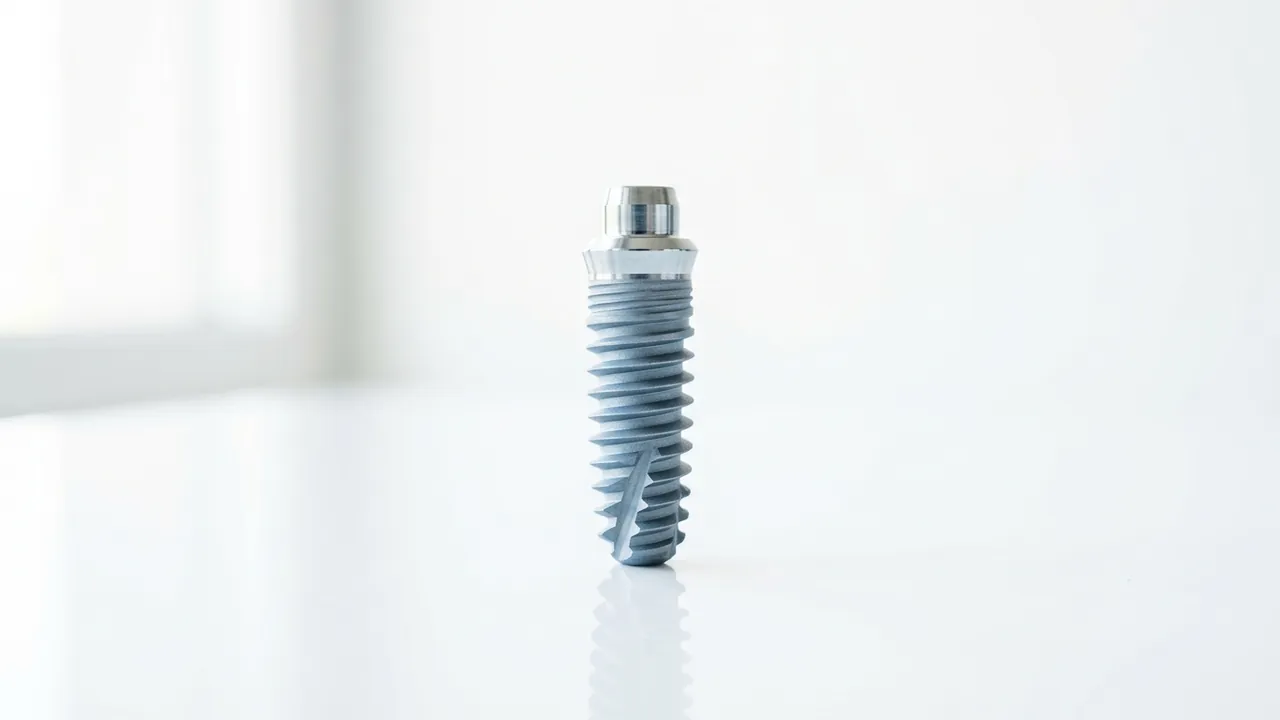
A dental implant replaces a lost tooth from the root up. A small titanium post is placed into the jawbone in a minor surgical procedure, and over the following weeks it fuses with the bone, a process dentists call osseointegration. Once it's stable, an abutment and a custom crown are fitted on top. The fixed replacement looks and works like a natural tooth. At SaluVista, implant treatment is led by our oral implantology dentist, Dr. Cansu A.
What it's good for
Replacing one missing tooth, several teeth, or, with implant-supported bridges and dentures, a whole arch. Because the post lives in the bone, it also helps preserve the jawbone. Bone there tends to shrink once a tooth is lost. Our dental implants cost guide walks through single versus multiple implants in detail.
The trade-offs
It's the more involved route: minor surgery, a healing period that often runs three to six months before the final crown, and a need for healthy gums and enough bone. Good aftercare matters here too. The NHS notes that implants, like natural teeth, depend on healthy teeth and gums. Daily cleaning is what makes them last.
What a veneer is
A veneer is a wafer-thin shell, usually porcelain. It bonds to the front surface of a tooth you already have. Think of it as a cosmetic layer. It changes how a tooth looks, without replacing it. To make room and help it bond, the dentist typically removes a small amount of enamel, then takes an impression so a lab can craft veneers matched to your smile. SaluVista's veneers and smile-design work is led by our prosthodontics dentist, Dr. Zeynep Y.
What it's good for
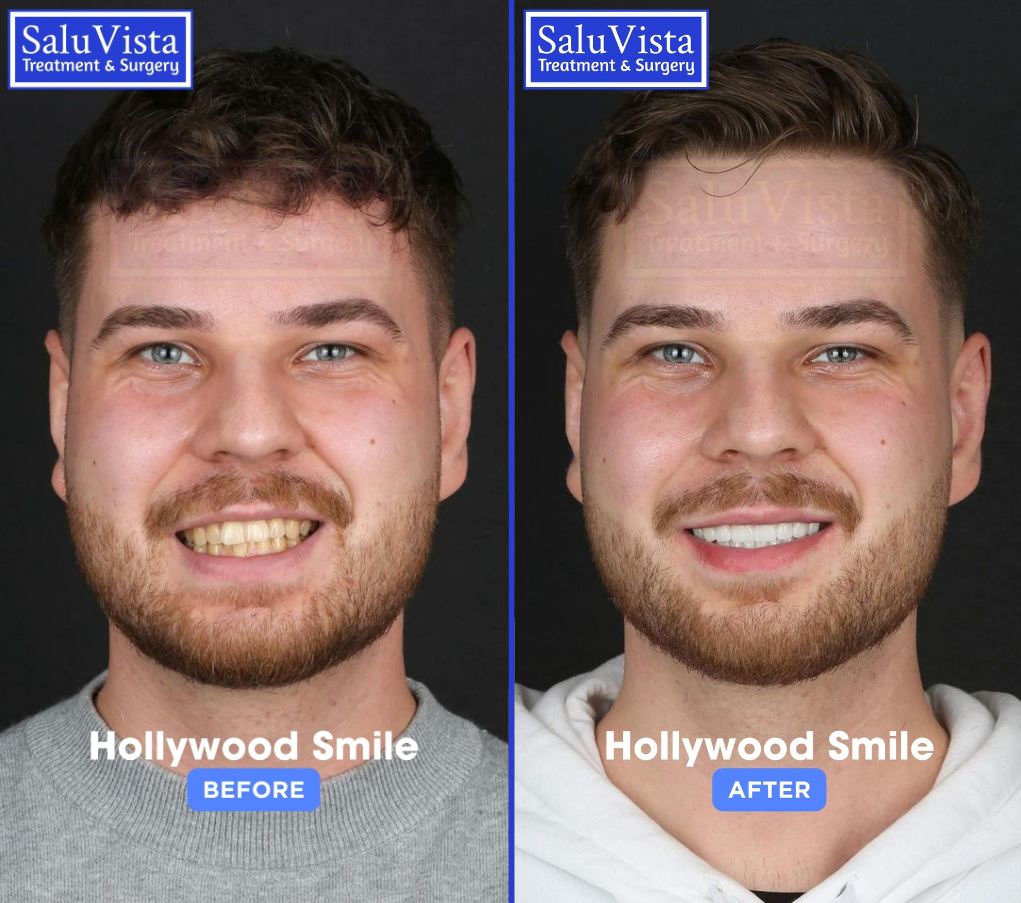
Front teeth that are structurally sound but cosmetically imperfect. That covers discolouration that won't whiten, small chips, minor gaps, mild misalignment, or worn edges. Veneers are the backbone of most smile-makeover and Hollywood smile plans. Our veneers cost guide explains porcelain options and pricing.
The trade-offs
Because a little enamel is usually removed, veneers are not reversible. Once a tooth is prepared, that's permanent. It will always need a veneer or crown over it. That's exactly why a conservative dentist won't recommend veneers on healthy teeth that don't need them, and will always take the least-invasive route that achieves your goal. The American Dental Association's MouthHealthy resource is a good, neutral primer.
A good dentist protects healthy tooth structure. If a whitening or a small bit of bonding will do, you shouldn't be talked into a mouthful of veneers, and you certainly shouldn't have a healthy tooth removed to "make way" for an implant.
Side-by-side comparison
| Dental implant | Veneer | |
|---|---|---|
| Solves | A missing tooth | An existing flawed tooth |
| What it is | Titanium post + crown in the jaw | Thin shell bonded to the tooth front |
| Replaces the root? | Yes | No — cosmetic surface only |
| Procedure | Minor oral surgery + healing months | Enamel prep + bonding, usually 2 visits |
| Reversible? | No (surgical) | No (enamel is reduced) |
| Typical lifespan | Post often decades; crown may be renewed | Around 10–15 years, then replaced |
| Guide price (SaluVista) | From £230 / $310 each | From £320 / $430 per tooth |
| Best for | Gaps, extractions, whole-arch cases | Cosmetic front-teeth improvements |
Longevity & upkeep
Neither is genuinely "permanent", and any dentist who guarantees a lifetime is overselling. A well-integrated implant post can last many years, often decades. But the crown on top wears, and may need renewing over time. Veneers generally last somewhere around ten to fifteen years before replacement. That depends on the material, your bite and your habits.
What actually drives longevity for both is the same short list: healthy gums, controlled grinding or clenching, no using teeth as tools, and consistent daily cleaning plus regular check-ups. In the UK, both are regulated cosmetic and restorative treatments. Your dentist should be registered with the General Dental Council. The same standards guide the clinicians you'll speak to through SaluVista.
The honest version: an implant is a bigger commitment up front but replaces a tooth you no longer have. A veneer is quicker and lighter but only improves a tooth that's already there. If someone offers to solve a missing tooth with a veneer, or to grind down healthy teeth "for symmetry", get a second opinion.
Cost compared
They do different jobs, so comparing them purely on price can mislead. Here's the honest framing. At SaluVista, guide prices start at £230 / $310 per dental implant and £320 / $430 per veneer, with a full Hollywood smile from £5,000 / $6,730 depending on the plan (roughly €270, €380 and €5,900 respectively at about £1 ≈ €1.18). These are starting points, not final numbers.
Your actual cost depends on how many teeth are involved and the materials chosen. Groundwork, such as extractions or bone grafting, can add to that too. We always give a transparent, itemised quote, confirmed after a proper assessment. Never a vague headline figure. Dig into the detail in our implants cost guide and veneers cost guide. Our dental bridges guide covers how fixed replacements compare.
Not sure whether you need an implant, a veneer, or both?
Send a photo and a few details. A SaluVista dentist gives you an honest, conservative recommendation. That includes the least-invasive option that meets your goal.
Ask a dentist on WhatsApp →When you need both
These two aren't rivals. They're teammates. A very common smile plan pairs implants to fill the gaps where teeth are missing with veneers or crowns on the remaining teeth so the whole smile matches in shape and shade. Some teeth might be missing while others are just worn or discoloured. Doing only one job leaves an obvious mismatch.
The sequencing matters. Implants usually need their healing time before final restorations go on. Your dentist plans the order deliberately. This kind of combined planning is exactly what smile design covers. Explore the full range on the SaluVista dental hub.
How to decide
- Start with the tooth's status. Missing means implant or bridge; present-but-flawed means veneer or crown.
- Ask for the least-invasive option. Whitening or small bonding may beat veneers; a healthy tooth should never be sacrificed for an implant.
- Get a real assessment. X-rays and an exam reveal bone, gum health and bite issues a photo can't.
- Insist on an itemised quote and don't decide under pressure or on price alone.
You'll speak with your SaluVista dentist before travelling; screening and booking happen in the app, and a qualified clinician makes the final call on what's appropriate for you.
Frequently asked questions
What is the difference between dental implants and veneers?
They solve different problems. A dental implant is a titanium post placed in the jawbone to replace a whole missing tooth, root and all, topped with a crown. A veneer is a thin shell bonded to the front of an existing, healthy tooth to change its shape, colour or alignment. Implants replace teeth you have lost; veneers reshape teeth you still have.
Can I get veneers instead of an implant for a missing tooth?
No. A veneer needs an existing tooth to bond to, so it cannot fill a gap where a tooth is missing. To replace a missing tooth you need an implant, a bridge or a denture. Veneers only work on teeth that are still present but need cosmetic improvement.
Which lasts longer, implants or veneers?
A well-integrated implant post can last many years, often decades, with good oral hygiene, though the crown on top may need replacing over time. Veneers typically last around ten to fifteen years before they need replacing. Longevity depends on your gums, bite, habits and daily care, and no dentist can promise an exact lifespan.
Are veneers or implants more invasive?
Implants are more invasive overall because they involve minor oral surgery to place a post in the jawbone and a healing period of several months. Veneers are less invasive but not reversible, as a thin layer of enamel is usually removed. A conservative dentist removes as little tooth structure as possible, either way.
Can you have both implants and veneers together?
Yes. Many smile plans combine both: implants to replace missing teeth and veneers or crowns to improve the appearance of the remaining teeth, so everything matches in shape and shade. Your dentist plans the sequence and timing after a full assessment.
How do I find out which I need?
Start with an assessment. Get the SaluVista app or message us with a photo and a few details for an honest, conservative review of your options.
This article is general information, not medical advice, and does not replace a consultation with a qualified dentist. Individual results and recommendations vary. Always discuss your options and risks with a dental professional.