Dental
Dental work: Turkey vs UK — an honest 2026 comparison
Medically reviewed by Dr. Elif Şahin
Quick answer
Dental work in Turkey is typically much cheaper than in the UK. That's mostly down to lower clinic running costs, and the best Turkish clinics still match UK standards on materials and expertise, though the trade-off is travel and planning aftercare from a distance. Quality depends on the specific dentist you choose, not the country. So compare like-for-like and confirm your follow-up before you book.
- Cost: Turkey is usually far cheaper — SaluVista guide prices start from £190 / $255 per zirconium crown, £320 / $430 per veneer and £230 / $310 per implant.
- Quality: depends on the individual clinic and dentist — top clinics in both countries are excellent.
- The real trade-off: travel, timing and how aftercare and follow-up are handled once you're home.
- Either way: a good dentist protects healthy teeth and offers the least invasive option — never rushed, never on price alone.
In this guide
If you're weighing up dental work in Turkey versus the UK, the real picture is messier than the "80% cheaper!" headlines let on, though Turkey can genuinely save you a lot of money, and its leading clinics are excellent. But price is only part of it. What actually decides the outcome is whether the dentist and the materials suit your teeth, and whether the aftercare still holds up once you're back home, and this guide lays both sides out plainly so you can choose with your eyes open.
It's general information to help you prepare, not medical advice.
Cost: how the numbers compare
Cost is what sends most people looking abroad in the first place, and the difference is real rather than a marketing trick, because staffing, property and running costs are all lower in Turkey, so the same treatment often lands at a fraction of a UK private-clinic price. That gap is exactly what lets patients pay for flights and a short stay and still come out ahead on a larger plan, and privately in the UK, a single crown or veneer commonly runs around £500–£1,200, while a single implant with its crown runs around £2,000–£3,500 / $4,710. That's several times the SaluVista guide prices.
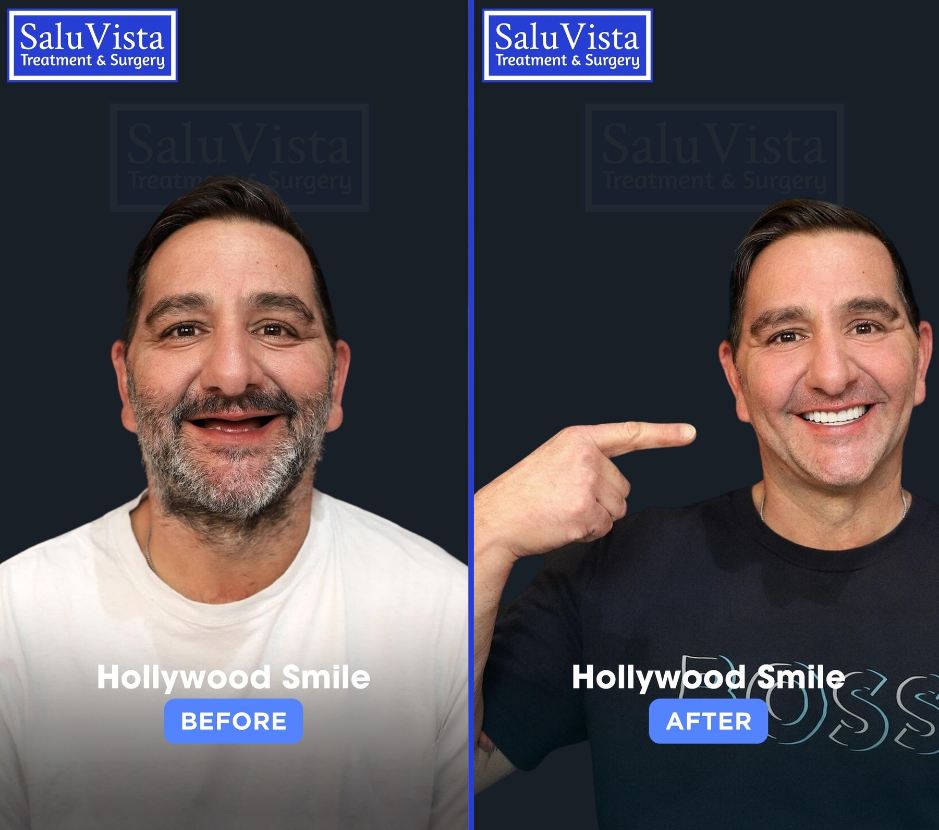
At SaluVista, the guide prices start from £190 / $255 per zirconium crown, £320 / $430 per veneer and £230 / $310 per dental implant, with a full Hollywood smile from £5,000 / $6,730 depending on the plan, and as a rough euro guide, £190 / $255 is around €225 and £320 / $430 around €380 (£1 ≈ €1.18). Treat every one of those as a starting point. Your actual price arrives as an itemised quote confirmed after assessment. No surprise on the day.
Compare like-for-like. A cheap headline price means little unless it covers the same materials, the same number of teeth, the same lab quality and the same warranty. When you weigh Turkey against the UK, put the full itemised plans side by side, not one clinic's "from" price against another's finished quote.
Want a deeper breakdown by procedure? See our guides to dental implant costs in Turkey and veneer costs in Turkey.
Turkey vs UK at a glance
| Turkey (via SaluVista) | UK private clinic | |
|---|---|---|
| Typical cost | Substantially lower | Higher |
| Quality of top clinics | Excellent | Excellent |
| Travel required | Yes — flight & short stay | None |
| Treatment speed | Often condensed into one trip | Spread over local appointments |
| Face-to-face follow-up | Remote, plus planned review | Local, in person |
| Regulator | Turkish Ministry of Health | General Dental Council (GDC) |
| Emergency repair at home | Needs an arranged pathway | Your own local dentist / NHS |
UK private price ranges checked July 2026.
Quality & expertise
Here's the part the headlines get wrong: quality is a property of the clinic and dentist, not the country. Turkey has world-class clinics with highly experienced dentists and modern equipment, and, like anywhere, it has weaker operators too. The UK is no different. What actually protects you is checking the specific dentist. Their qualifications, their experience with your procedure, and the materials they use.
At SaluVista, the dental side is led by experienced dentists including Dr. Zeynep Y. (prosthodontics: veneers, crowns and smile design) and Dr. Cansu A. (oral implantology: implants and bridges), and you speak with the relevant dentist before you travel, and you can read more about the team on our our dentists and surgeons page.
A good dentist, in Turkey or the UK, protects your healthy tooth structure and offers the least invasive option that meets your goals. Be wary of anyone pushing extensive work you never asked about.
This "conservative care" principle matters most with cosmetic dentistry. Veneers, for instance, can mean shaving off some natural enamel, and that part is irreversible, so a trustworthy dentist walks you through the trade-offs and won't steer you toward the biggest plan just because it's on the menu.
Standards & regulation
In the UK, dentists have to be registered with the General Dental Council (GDC), the statutory regulator that sets professional standards and handles complaints, while in Turkey, clinics and dentists are licensed by the Turkish Ministry of Health. Both systems exist to hold standards up. The practical difference for you comes down to recourse. Chasing a complaint is simpler with a locally regulated UK dentist than it is across a border.
That isn't a reason to rule Turkey out. It's a reason to pick a reputable, transparent provider that gives you a written plan and a warranty, and sensible day-to-day advice like the NHS guide to healthy teeth and gums applies wherever you're treated, and general references such as the ADA's MouthHealthy can help you ask sharper questions.
Wondering how the safety side stacks up overall? Our guide on is dental tourism in Turkey safe? walks through the checks that matter.
Travel & timing
Travel is the genuine cost of going abroad: time, energy and logistics. The upside is that the treatment is usually condensed. Instead of a string of appointments spread over weeks, much of it happens at once. Often within one focused trip.
Crowns and veneers
These are often done in a single visit of roughly three to seven days. That leaves time for the preparation, the lab work and the fitting. It's a demanding few days, but an efficient one.
Dental implants
Implants usually need healing time between placement and the final teeth. That's why many plans run across two trips several months apart. Others put the implants in on one visit and finish the restoration later. Your dentist sets the exact schedule after assessing your case. Don't take a one-trip promise at face value for complex implant work.
How SaluVista fits in: SaluVista is an Istanbul-based medical-travel platform (an Orozan company). You speak with your dentist before travelling, screening and booking happen in the app, and a qualified human makes the final call on whether a plan is right for you, so nothing gets rushed.
Aftercare & follow-up
This is where careful planning separates a good outcome from a stressful one. When your dentist is in another country, pin down three things first, before you book:
- What the warranty covers: which repairs, for how long, and on what conditions.
- How remote follow-up works: who you contact, how quickly they reply, and in what language.
- What happens in an emergency at home: for anything urgent you'd see a local UK dentist, or use NHS emergency dental services out of hours, then coordinate any warranty repair with your clinic.
Staying in the UK has the obvious advantage that follow-up is local and face-to-face, while going abroad can still work very well, but only when the aftercare pathway is written down and agreed rather than left vague. A reputable platform sorts this out for you. You're never stuck without support.
How to decide
- Get a proper assessment first. A written, itemised plan tells you what you actually need, and lets you compare Turkey and the UK on equal terms.
- Judge the dentist, not the flag. Check qualifications, experience with your procedure, materials and warranty, in either country.
- Confirm aftercare before you commit. Know your follow-up and emergency options in advance.
- Favour the least invasive option. Be wary of any plan that expands well beyond your original concern.
- Never decide on price or pressure alone. The cheapest quote isn't the goal; the right, durable outcome is.
Want the full picture? Visit our dental treatment hub to see the full range of treatments and how the process works end to end.
Want an honest, itemised comparison for your teeth?
Share your situation and goals, and a SaluVista dentist gives you a transparent plan, including whether the least invasive option, or even staying local, is the better call for you.
Get a free assessment →Frequently asked questions
Is dental work in Turkey cheaper than the UK?
Yes, usually significantly cheaper. Lower staffing, property and running costs in Turkey mean the same treatment often costs a fraction of a UK private-clinic price. For example, SaluVista guide prices start from £190 / $255 per zirconium crown, £320 / $430 per veneer and £230 / $310 per dental implant, confirmed as an itemised quote after assessment. Even with flights and a hotel, a multi-tooth plan can still work out lower than the UK equivalent, but you should compare like-for-like on materials, warranty and aftercare rather than on headline price alone.
Is dental treatment in Turkey as good quality as the UK?
Quality depends on the individual clinic and dentist, not the country. Turkey has excellent, modern clinics with highly experienced dentists, and it also has weaker ones — exactly as the UK does. The important thing is to check the specific dentist's qualifications and experience, the materials used, and the aftercare arrangements. A good dentist in either country protects healthy tooth structure and offers the least invasive option rather than pushing extensive work.
What happens if something goes wrong after I return to the UK?
This is the single most important thing to plan before you travel. Ask any overseas clinic exactly what its warranty covers, how remote follow-up works, and what happens if you need an urgent repair once home. In the UK you would see your NHS dentist for emergencies, or arrange a private review. A reputable platform arranges a written treatment plan, a warranty and a clear aftercare pathway so you are never left without support.
How long do I need to stay in Turkey for dental work?
It depends on the treatment. Crowns and veneers are often completed in one trip of roughly three to seven days, allowing time for preparation, the lab work and fitting. Dental implants usually need healing time, so many plans involve two visits several months apart, or placing implants on one trip and the final teeth on a later one. Your dentist confirms the exact schedule after assessing your case.
Should I choose Turkey or the UK for my dental work?
There is no single right answer — it depends on your priorities. If you value the lowest cost and are comfortable travelling and planning aftercare carefully, Turkey can offer strong value. If you prioritise seeing the same dentist locally with no travel, and cost is less of a concern, staying in the UK may suit you better. The safest approach either way is a proper assessment, a written plan, and a dentist who recommends the least invasive option for your teeth.
How do I get a personalised comparison?
Start with an assessment. Get the SaluVista app or message us, and a dentist reviews your case honestly — including whether staying local might be the better choice for you.
This article is general information, not medical advice, and does not replace a consultation with a qualified dentist. Individual results and recommendations vary. Always discuss your options and risks with a dental professional.