Hair transplant
Hair transplant scars: FUE vs FUT explained
Medically reviewed by Dr. Ferhat Demiroğlu
Quick answer
Every hair transplant leaves some scarring, but the type differs by technique. FUE (follicular unit extraction) leaves many tiny, round dot scars scattered across the donor area that are usually very hard to see, even at short lengths. FUT (follicular unit transplantation) leaves a single thin linear scar across the back of the head, easily hidden by hair worn at normal length. With skilled technique and good healing, both are typically well concealed.
- FUE → many tiny dot scars, usually hard to see; better for very short styles.
- FUT → one thin linear scar, hidden by hair at normal length but can show if fully shaved.
- Visibility depends on technique, skin tone, healing and how you wear your hair, not the method alone.
- You can reduce scarring with an experienced surgeon and careful aftercare; you can't make it zero.
In this guide
Scarring is one of the most common worries people have before a hair transplant. It's a fair one. The honest answer is that any procedure that moves hair from a donor area to a thinning one leaves some mark behind; what changes between techniques is the shape, size and visibility of that scarring. This guide explains the two main patterns, the scattered dot scars of FUE and the single line of FUT, what makes a scar more or less noticeable, and what you can realistically do about it.
It's general information to help you prepare for a conversation with a surgeon, not medical advice.
Why every transplant scars
A hair transplant relocates healthy follicles from a donor area (usually the back and sides of the head, where hair is genetically resistant to thinning) into areas that are balding. Removing those follicles leaves small wounds in the donor skin, and wherever skin is cut or punctured and heals, it forms scar tissue, so the question is never "will there be a scar?" but rather "what kind, how visible, and how well can it be hidden?"
The good news is that modern techniques are designed to make donor scarring as inconspicuous as possible, and surrounding hair does most of the concealing; the NHS notes that hair transplants can leave scarring, so it's worth understanding the trade-offs of each method before you choose. For a full overview of both techniques, see our hair transplant hub, or our hair transplant cost guide for how the pricing works.
FUE: the tiny dot scars
Follicular unit extraction (FUE) removes follicles one graft at a time using a tiny punch, typically under a millimetre across, and each extraction leaves a small round wound that heals into a pinpoint dot scar. Instead of one visible mark, you end up with hundreds or thousands of these dots spread thinly across the donor area.
Why they're usually hard to see
Because the dots are so small and scattered, not clustered into a line, they tend to blend into the natural texture of the scalp once healed. For most people, hair grown to even a short length covers them completely. This is the main reason FUE is often preferred by people. They like to wear their hair short or faded. That said, at a complete shave the dots can become faintly visible in some people, particularly where there's high contrast between skin and hair colour, or where a large number of grafts were taken.
FUE doesn't mean "scarless". You'll read that word a lot online, but it isn't accurate. It means the scarring is distributed and typically far less conspicuous than a line.
FUE is also the basis of the DHI method. If you're weighing implantation styles, our FUE vs DHI comparison breaks down the differences.
FUT: the linear scar
Follicular unit transplantation (FUT), sometimes called the strip method, removes a thin strip of skin from the back of the head, from which the surgeon then separates individual grafts. The donor edges are stitched back together, healing into a single fine linear scar running horizontally across the back of the scalp.
When the line shows — and when it doesn't
A well-executed FUT scar is narrow and sits in an area easily covered by hair of a normal length. For most people it's invisible in day-to-day life. The trade-off is that it can become visible if the head is shaved down, which is why FUT is generally not the first choice for people who want the option of a very short or shaved style. FUT does allow a large number of grafts to be harvested in a single session, and can be a sensible option in the right case (our how many grafts guide covers what actually shapes that number); the decision is one to make with your surgeon.
FUE vs FUT scarring compared
| FUE | FUT | |
|---|---|---|
| Scar type | Many tiny dot scars | One thin linear scar |
| Location | Scattered across donor area | Line across back of head |
| Visible at normal hair length | Usually no | Usually no |
| Very short / shaved styles | Often possible; dots may faintly show | Line can become visible |
| Grafts per session | Harvested individually | Large numbers in one strip |
| Best suited to | Those wanting short-hair flexibility | Those keeping hair at normal length |
What affects how visible a scar is
Two people can have the same procedure and end up with noticeably different results. Scar visibility is driven by several factors working together:
- Surgeon skill and technique. Punch size, extraction pattern and how evenly the donor area is harvested all shape how discreet FUE dots are; suture technique and tension shape a FUT line.
- Donor management. Taking too many grafts from one region can thin the donor area and make scars easier to spot. Careful, even harvesting matters.
- Your skin and healing. Skin tone, hair-to-skin colour contrast, and your individual healing all influence the final look.
- Tendency to scar. A minority of people are prone to raised (hypertrophic) or keloid scars. If that's you, it's essential to raise it before the procedure.
- Aftercare. Picking scabs, sun exposure and smoking can all worsen how a scar settles.
Skin-tone note: where there's a strong contrast between hair colour and skin colour, for example dark hair on very fair skin, or the reverse, scars can be marginally easier to see at a full shave. This is worth flagging to your surgeon so expectations are realistic for your specific case.
How to minimise scarring
You can't reduce scarring to zero. That said, the difference between a discreet result and a conspicuous one often comes down to choices you control:
- Choose an experienced, qualified surgeon. This is the single biggest factor. At SaluVista, hair restoration is led by Op. Dr. Caner K., a board-certified plastic surgeon with more than 10,000 surgeries performed.
- Follow aftercare precisely. Don't scratch or pick at scabs, keep to the washing routine you're given, and protect the donor area from the sun while it heals. Our recovery timeline walks through what to expect week by week.
- Don't smoke. Smoking impairs healing and can affect how wounds close and scar.
- Be realistic about graft numbers. A responsible clinic won't over-harvest your donor area chasing density.
- Disclose any scarring history. Tell the team if you've had keloid or raised scars before, so it can be assessed properly.
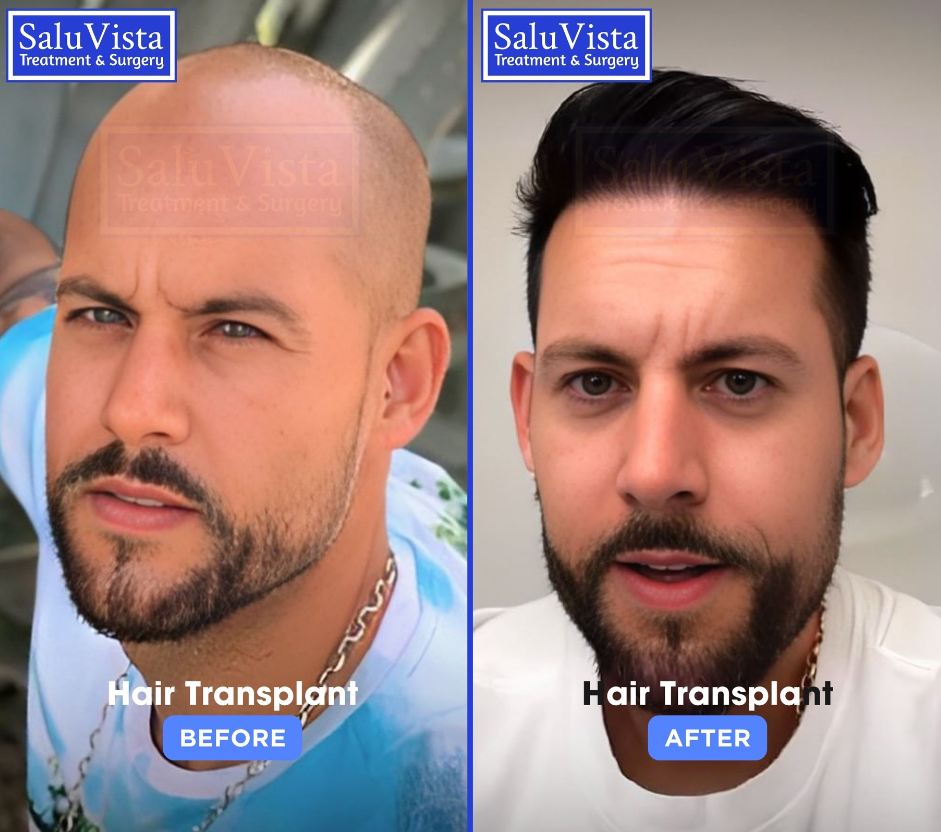
Worried about scarring with your hair type?
Share a few photos and how you like to wear your hair, and a specialist will give you an honest view of which technique suits you, and what scarring to realistically expect.
Get a free assessment →Fixing or hiding an existing scar
If you already have a noticeable donor scar, from a previous procedure elsewhere, or a wider-than-hoped FUT line, several options may help. The simplest is growing your hair over the area. Beyond that, a specialist might discuss:
- Transplanting follicles into the scar so hair grows through and softens the line.
- Scalp micropigmentation (SMP) — cosmetic tattooed dots that mimic short stubble and reduce colour contrast at the scar.
- Scar revision in selected cases, where the scar is surgically refined.
Which of these fits, if any, depends entirely on the scar and your goals. It should be assessed individually. Scarring is also one part of the wider question of whether the procedure is right for you; our guide on whether a hair transplant is safe covers the broader risk picture. The International Society of Hair Restoration Surgery (ISHRS) is a useful resource for understanding standards of care and choosing a qualified practitioner.
At SaluVista you speak with your surgeon before travelling, and a qualified human makes the final decision on whether a procedure, and which technique, is appropriate for you.
Frequently asked questions
Do hair transplants leave scars?
Yes — every hair transplant leaves some scarring, because it involves removing and moving hair from the donor area. The type differs by technique. FUE (follicular unit extraction) leaves many tiny, round dot scars that are usually hard to see. FUT (follicular unit transplantation) leaves a single thin linear scar along the back of the head. With good technique and healing, both are typically well hidden by surrounding hair.
Which leaves less noticeable scarring, FUE or FUT?
FUE generally leaves less visible scarring because it produces scattered tiny dot scars rather than one line. This is why many people who like to wear their hair very short choose FUE. FUT leaves a single linear scar that is easily covered by hair worn at a normal length, but can show if the head is shaved. The best choice depends on your hair, goals and how you like to wear it.
Can you shave your head after a hair transplant?
After FUE you can usually wear your hair very short, though the tiny dot scars may become faintly visible at a complete shave, depending on skin tone and healing. After FUT, a linear donor scar can show if the head is shaved down, so a fully shaved look is generally not recommended. Discuss your preferred hairstyle with your surgeon before choosing a technique.
How can I minimise hair transplant scarring?
Choose an experienced surgeon, follow all aftercare instructions, avoid smoking, protect the area from sun, and do not pick at scabs. Careful donor management and appropriate graft numbers also matter. Some people are prone to raised or keloid scars — tell your surgeon about any history of this so it can be assessed before your procedure.
Are hair transplant scars permanent?
Scars from any surgery are permanent to some degree, but hair transplant scars typically fade and settle over the months following the procedure. FUE dot scars usually become very difficult to see, and a well-placed FUT linear scar is normally concealed by surrounding hair. Their final appearance depends on technique, your skin and how you heal.
Can hair transplant scars be fixed or hidden?
Yes. Growing hair over the area is simplest. A wider scar can sometimes be softened by transplanting follicles into it, by scalp micropigmentation (tattooed dots mimicking stubble), or occasionally by scar revision. Get the SaluVista app or message us for an honest, individual assessment.
This article is general information, not medical advice, and does not replace a consultation with a qualified doctor. Individual results, scarring and recommendations vary from person to person. Always discuss your options and risks with a medical professional.