Timeline
Surface recovery after a hair transplant is fairly quick: scabs form in the first days and flake away within about 7 to 14 days, redness fades over a few weeks, and many people return to desk work within a few days to a week. The transplanted hairs then shed within the first two to eight weeks before regrowing gradually over roughly 6 to 12 months.
One of the most common questions before a hair transplant is simple: what will the weeks afterwards actually look like? Recovery actually runs on two separate clocks. One is short, for how your scalp looks and feels. The other is much longer, and belongs to the hair itself. This guide walks through both, day by day and month by month, so nothing takes you by surprise.
It's general information to help you prepare. It's not medical advice, and not a substitute for the personalised instructions your surgeon gives you.
It helps to separate two things that people often blur together:
Understanding that split is the key to a calm recovery. The moment your scalp looks healed is not the moment you see your result. The temporary shedding in between is expected, not a setback. The NHS notes that a transplant is a procedure where hair is moved to thinning areas, and that results develop over time rather than instantly (NHS: Hair loss).
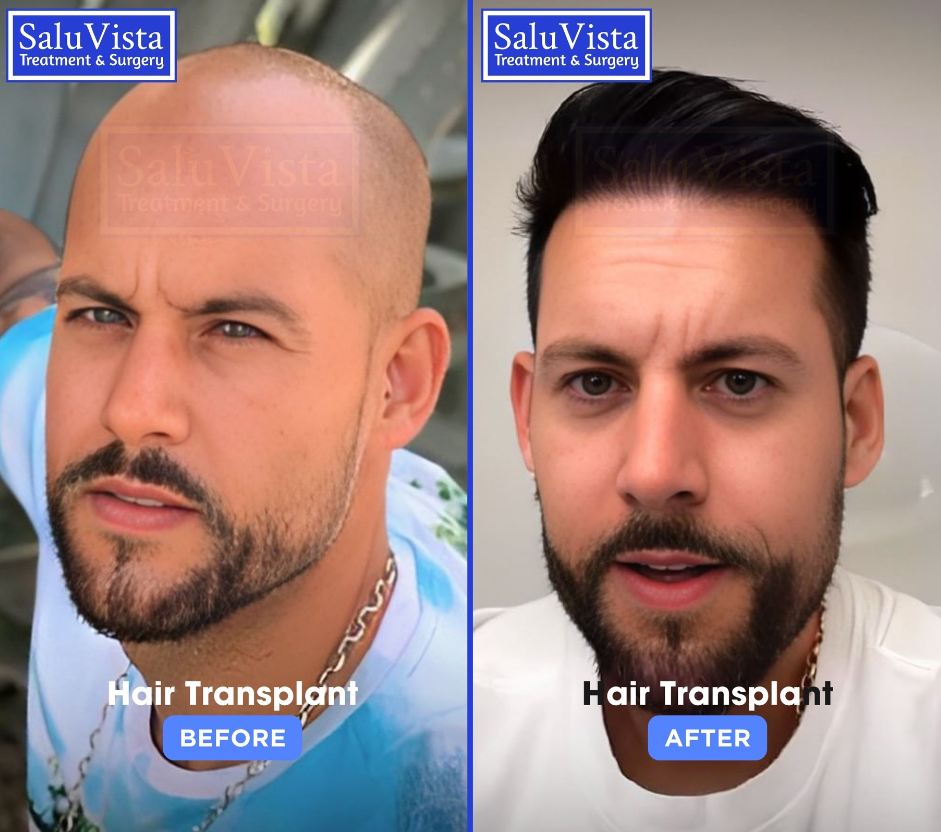
The early phase is when your grafts are most delicate. That matters more than people expect. Careful, gentle handling now protects the work that was done.
You'll leave with the donor and recipient areas slightly tender. Tiny crusts begin forming around each graft. The donor area may feel tight too. Your clinic explains how to sleep (usually semi-upright, head elevated) and what not to touch.
Mild soreness and numbness are common. Small scabs settle around the grafts. Many clinics introduce a first gentle wash in this window, often around day 2 or 3, using a specific pouring-and-dabbing technique and a recommended product, never rubbing or direct pressure. Follow the exact method you're shown.
Some people notice forehead or around-the-eye swelling in this window as fluid settles downward. It looks worse than it is, usually peaks and then resolves within a few days. Sleeping elevated and following your clinic's advice helps.
With gentle daily washing as directed, the little scabs soften and begin to flake away. It's important not to pick or scratch them off. Let them release on their own. By around day 10, many people look noticeably tidier.
By the start of week two, most scabs have cleared with regular gentle washing. Any lingering pinkness in the recipient area continues to fade over the following weeks. It's easier to hide than the crusting was.
Between roughly weeks two and eight, most of the transplanted hairs fall out. This is called shock loss, and it catches many people off guard. Here's the reassuring part: it's the hair shaft that sheds, not the follicle. The transplanted root stays in place, enters a resting phase, and later grows a fresh hair. Shedding is an expected stage, not a failure.
Seeing transplanted hairs fall out can be unnerving. But shedding is part of the normal cycle. The follicle remains, and new growth follows.
Some people also notice temporary thinning of existing native hairs near the treated area, which typically recovers. If anything worries you, your clinic is the right first call. For a deeper look at how the result builds after shedding, see our results timeline.
Through weeks two to four, washing usually becomes more normal as the scalp heals, though you should still follow your clinic's product and technique guidance rather than returning straight to vigorous shampooing. Our aftercare guide covers the full routine step by step.
After shedding, there's often a flat, uneventful period where little seems to happen. This is normal, and probably the hardest part psychologically. The grafts are resting, not lost. Try not to judge the outcome here.
New hairs generally start to emerge around the three-to-four-month mark. Early growth can look fine, sparse or slightly uneven. That's typical, as hairs come through at different rates and thicken over time. Patience matters here too.
Through the second half of the year the new hair grows longer and denser. Unevenness evens out too. The fuller result develops over roughly 12 months, with the crown sometimes taking a little longer. Individual timelines vary. No honest clinic can promise a specific density or a guaranteed outcome.
| Time | Scalp & healing | The hair |
|---|---|---|
| Day 0 | Tender; tiny crusts form | Grafts freshly placed |
| Days 1–3 | Soreness; first gentle wash | In place, settling |
| Days 2–5 | Possible forehead swelling | In place |
| Days 5–10 | Scabs loosen & flake | In place |
| Weeks 2–4 | Scabs gone; redness fading | Shedding begins (normal) |
| Months 1–3 | Healed surface | Resting phase — quiet |
| Months 3–6 | Normal | New growth emerges |
| Months 6–12 | Normal | Thickens; result develops |
For a desk-based job, many people go back within a few days to about a week, once early swelling has settled and they feel comfortable. Two practical points shape the timing:
Many patients travelling from abroad plan a short buffer before flying home and returning to work. Follow your surgeon's specific guidance for your situation.
Tell us about your hair, your timeline and your questions. A specialist will walk you through what to expect, day by day, and how SaluVista's all-inclusive hair transplant works.
Chat with a specialist on WhatsApp →Sweat, pressure and impact are the enemies of a fresh graft, so activity comes back in stages:
The International Society of Hair Restoration Surgery emphasises choosing a qualified surgeon and following proper aftercare, since technique and post-op care both shape the result (ISHRS). When in doubt, ask before you do it. A few extra days of caution is cheap insurance.
Most recoveries are smooth, but contact your clinic promptly if you notice signs that fall outside what you were told to expect. Examples include spreading redness, warmth or swelling, discharge, a fever, or unusual or worsening pain. These can be signs of infection. Catching it early is what matters. Your care team is there for exactly this, and reaching out is never an overreaction.
Send a message and a SaluVista coordinator gets back to you in your language — we support 11+ languages including English, Arabic, Russian and German. For a private medical screening, we'll guide you into the app.