
Hair transplant
The right age for a hair transplant
Medically reviewed by Dr. Ferhat Demiroğlu
Quick answer
There is no single "right age" for a hair transplant. What matters most is whether your hair loss has stabilised. A surgeon needs to see your likely long-term pattern before planning a hairline. That's why loss is often treated and observed first, and why the decision is made case by case after assessment, not by a number on a form.
- Stability of your hair loss matters more than your age.
- Operating too young risks an unnatural result as surrounding hair keeps thinning.
- There's no strict upper limit: healthy older patients often plan very predictably.
- A surgeon decides timing after reviewing your pattern, donor area and health.
In this guide
One of the most common questions people ask before a hair transplant is simply: am I the right age? It's a reasonable question, but it's not quite the right one. A good surgeon isn't really counting your birthdays. They're trying to predict where your hair loss is heading, so the result still looks natural in five, ten or twenty years' time.
This guide explains why stability matters more than age, what can go wrong when a transplant is done too early, and how an experienced surgeon decides whether now is the right moment. It's general information to help you prepare, not medical advice.
Why age is the wrong question
Male pattern hair loss is progressive. It doesn't happen once and stop. It tends to continue in a recognisable pattern over years. The NHS notes that this kind of hereditary hair loss is common and usually follows a predictable course. Because of that, the useful question isn't "how old am I?" but "has my loss settled into a pattern a surgeon can plan around?"
A hair transplant moves hair from a stable donor area (usually the back and sides of the scalp) to thinning areas. Those transplanted hairs generally keep their original resistance to loss. But the native hair around them can continue to thin. If a surgeon builds a dense young hairline while the hair behind it is still receding, you can end up with an odd island of transplanted hair and a gap opening up behind it. Age is only a rough proxy for the thing that actually matters: where your loss has got to, and where it's going.
The core principle: a hair transplant redistributes the hair you have. It doesn't create new growth to keep pace with future loss, so the plan has to account for the loss still to come, not just the loss you see today.
Stability: what surgeons really look for
"Stable" doesn't mean your hair loss has stopped forever. Few surgeons would promise that. It means the rate and pattern have settled enough to be predictable, and a surgeon looks at several things together to gauge it.
Your pattern on the Norwood scale
The Norwood scale is the standard map of male pattern baldness, from an intact hairline through to advanced loss. Where you sit today, and how quickly you've moved between stages, tells a surgeon a great deal about what to expect next and how to design a hairline that will still suit you as you age.
Family history
Hereditary hair loss runs in families. How your father, uncles and grandfathers lost their hair is one of the best available clues to your own likely trajectory, including how far it went and how fast.
Response to medication
For many people, medication can slow loss and, in some cases, help stabilise it. Seeing how your hair responds over several months gives a surgeon real information rather than a guess. That's why medication and surgery are often discussed together, not as either/or.
The risks of operating too young
The temptation in your early twenties is understandable. You've noticed a receding hairline, it's distressing, and a transplant promises a fix. But operating before the loss has declared itself carries real, specific risks.
- An unnatural result over time. A dense, low, "teenage" hairline can look great at 22 and out of place at 35 as the rest of the hair recedes around it.
- Chasing the loss. If native hair keeps thinning, you may need repeated procedures to fill new gaps, using up limited donor hair each time.
- Donor hair is finite. There's only so much hair in the safe donor zone. Spending it early, before the full pattern is known, can leave too little for the areas that matter most later. Our guide to how many grafts you need explains why donor supply is the real budget.
- Regret and revision. Poorly timed work is one of the harder things to correct, and correction is not always fully possible.
A transplant you're glad you had at 40 is worth more than one you rushed at 22 and spend the next decade correcting.
What to expect by age band
| Age band | Typical situation | Common surgical approach |
|---|---|---|
| Late teens / early 20s | Loss often still progressing; pattern unclear | Usually assess and treat first; surgery frequently deferred |
| Mid–late 20s | Pattern becoming clearer for many | May be a candidate if loss is stabilising; conservative planning |
| 30s–40s | Pattern usually well established | Often a good window; predictable, natural planning |
| 50s and beyond | Loss typically stable; health is the key factor | Frequently good candidates if healthy with adequate donor hair |
These bands are a rough guide, not rules. Plenty of people in their late twenties are excellent candidates, and some in their thirties still need to wait or treat first. The assessment decides, not the age band.
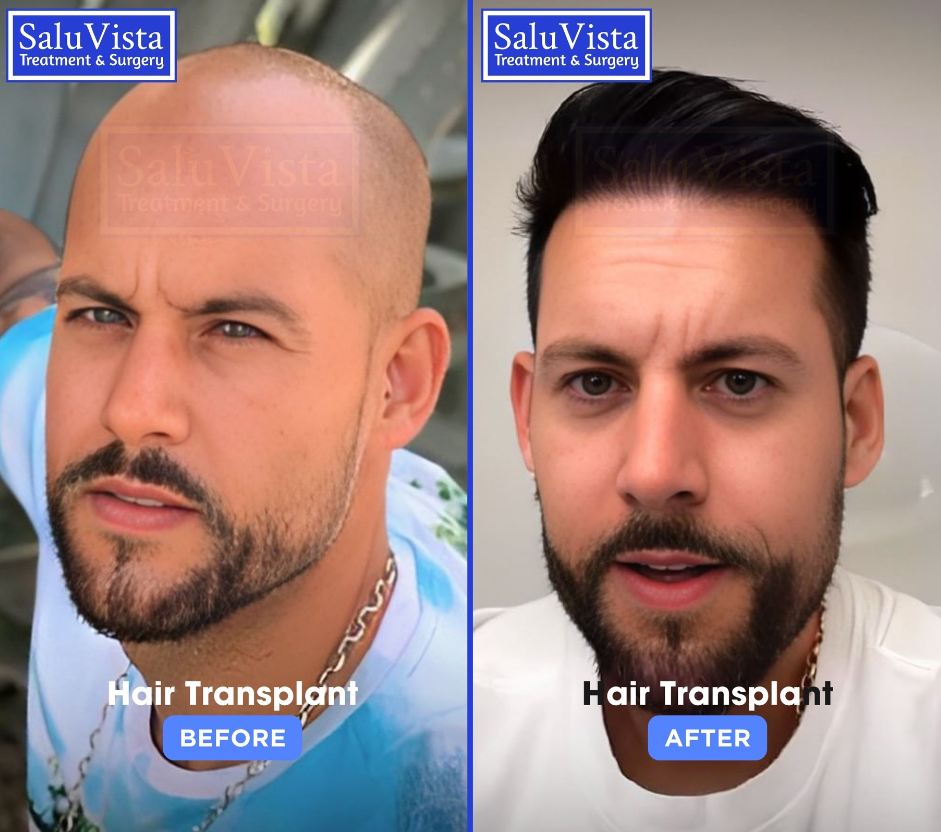
How surgeons assess timing
At SaluVista, hair restoration is led by Op. Dr. Caner K., a board-certified plastic surgeon with over 10,000 procedures behind him. Deciding when to operate is as much a part of his job as the surgery itself. A careful assessment typically weighs:
- Current Norwood stage and how fast you've progressed.
- Donor area quality and density — how much good hair is available and whether it will last.
- Family history of hair loss.
- Whether medication should come first to slow or stabilise loss.
- Your general health and suitability for a procedure.
- Your expectations — designing a hairline that will still look right decades from now.
With SaluVista, you speak with your surgeon before you travel. Screening and booking happen in the app, and a qualified human, not an algorithm, makes the final decision on whether, and when, a transplant is right for you. Sometimes the most honest advice is "not yet," and a good clinic will tell you so.
Not sure whether now is the right time?
Share a few photos and your history, and our team gives you an honest view, including if the best advice is to wait, treat first, or reassess later. Single session, unlimited grafts, all-inclusive from £1,500 / $2,020 (about €1,750).
Get a free assessment →If you're told to wait
Being advised to wait can feel like a setback, but it's usually good news: it means a surgeon is protecting your long-term result rather than taking your money today. Waiting time is rarely wasted time. It's a chance to:
- Try medication and see how your hair responds, which itself informs the plan.
- Let the pattern declare itself so a hairline can be designed with confidence.
- Preserve donor hair for when it will do the most good.
The International Society of Hair Restoration Surgery encourages patients to seek qualified, ethical advice and to be wary of clinics that promise a quick fix regardless of circumstances. If you'd like to understand where you sit on the loss curve first, our Norwood scale guide is a good place to start, and our transplant vs medication comparison covers what treating first can do.
Frequently asked questions
What is the best age for a hair transplant?
There is no single best age. Most surgeons prefer to operate once a person's hair loss has stabilised and their long-term pattern is clearer, which is often from the mid-twenties onward. Age matters less than whether your loss has settled, so the decision is made case by case after assessment, not by a birthday.
Can you get a hair transplant at 20 or 21?
It is possible but often unwise. In your early twenties hair loss is frequently still progressing and its final pattern is hard to predict. Operating too early risks an unnatural result as surrounding hair continues to thin. Many surgeons prefer to wait, stabilise the loss with medication first, and reassess.
Am I too old for a hair transplant?
There is no strict upper age limit. Healthy people in their fifties, sixties and beyond can be good candidates, because by then the hair-loss pattern is usually stable and easy to plan around. What matters is general health and having enough good-quality donor hair, not age alone.
Why do surgeons say to wait before a hair transplant?
Because hair loss is progressive. If a surgeon transplants hair into a young hairline while the hair behind it keeps thinning, gaps can appear later and look unnatural. Waiting until the pattern is clearer, and often using medication first, leads to a more natural, sustainable result.
Does age affect hair transplant results?
Age itself is not the main factor. What affects results is whether your hair loss is stable, how much healthy donor hair you have, and your general health. Older patients often plan more predictably because their pattern has settled, while younger patients may need to wait or treat the loss first.
How do I find out if it's the right time for me?
Start with an assessment of your pattern, donor area and history. Get the SaluVista app or message us for an honest, personalised view — including if the best advice is to wait.
This article is general information, not medical advice, and does not replace a consultation with a qualified doctor. Individual results and recommendations vary, and no outcome can be guaranteed. Always discuss your options and risks with a medical professional.
Sources & further reading
- NHS — Hair loss: overview of causes, patterns and when hair loss is hereditary and progressive.
- International Society of Hair Restoration Surgery (ISHRS): guidance on choosing qualified surgeons and realistic hair-restoration care.