Hair transplant
Beard transplant in Turkey (2026): how it works, candidacy and results
Medically reviewed by Dr. Ferhat Demiroğlu
Quick answer
A beard transplant moves your own hair follicles, usually from the back of the scalp, into patchy, thin or scarred areas of the beard using the FUE technique. Each follicle is placed to follow the natural angle of beard growth. The transplanted hairs shed within weeks, then regrow, with the fuller result generally visible around one year.
- Best suited to men with patchy or uneven beards and enough healthy scalp donor hair.
- Done under local anaesthetic as a day procedure; most people return to everyday activities within a few days.
- Results build gradually over 6–12 months, though no result can be guaranteed, and a surgeon must confirm you're a candidate.
In this guide
A beard transplant is one of the most requested facial-hair procedures for men who have patchy, thin or scarred beards that won't fill in on their own. It uses the same core technique as a scalp hair transplant. That means moving your own follicles to where you want more density. The difference is the extra care given to the angles and contours of the face. This guide explains, honestly, how it works and who it suits. It also covers what a realistic recovery and results timeline looks like.
It's general information to help you prepare, not medical advice.
What a beard transplant is
A beard transplant relocates individual hair follicles from a donor area, most often the back and sides of the scalp, where hair is dense and typically resistant to thinning. Those follicles go into the beard, moustache, cheeks, sideburns or jawline. Because the follicles are your own living hair, once they settle they grow, thicken and can be trimmed or shaved like the rest of your beard.
It's commonly used to fill bald patches, thicken a sparse beard, define a jawline or moustache, cover scars (for example from acne, injury or previous surgery), or restore facial hair after conditions that cause patchy loss. It does not create hair out of nothing. It redistributes the donor hair you already have, which is why donor supply matters so much.
How the FUE procedure works
Modern beard transplants almost always use FUE (follicular unit extraction). Rather than removing a strip of skin, the surgeon harvests follicles one at a time. A typical day looks like this:
- Planning & anaesthetic. The beard shape is drawn on, graft numbers estimated, and local anaesthetic given so the procedure is comfortable while you stay awake.
- Extraction. Individual follicles are removed from the scalp donor area using a fine punch, leaving tiny dot-like marks rather than a line.
- Channel creation. The surgeon makes tiny incisions in the beard area at the precise angle and direction facial hair naturally grows. That's what makes the result look convincing.
- Placement. Follicles are placed one by one into those channels, usually with single-hair grafts along the edges for a soft, natural border and slightly denser packing in the fuller zones.
At SaluVista, hair and beard restoration is led by Op. Dr. Caner K., a board-certified plastic surgeon with over 10,000 surgeries. The technique itself is well established; the ISHRS, the field's main professional body (International Society of Hair Restoration Surgery), publishes guidance and standards for follicular-unit procedures.
Grafts vs. hairs. A "graft" is a follicular unit that may contain one, two or more hairs. Beard work leans heavily on single-hair grafts for a natural edge, so graft counts for a beard are usually lower than for a full scalp case. Quality of placement matters more than the raw number.
Who is a good candidate
One factor matters most: enough healthy donor hair on the scalp. It must be enough to move without thinning that area. Beyond that, good candidates generally:
- Have patchy, thin, uneven or scarred beard areas they'd like to fill.
- Are in good general health and don't have an active, untreated cause of hair loss in the donor area.
- Hold realistic expectations: a beard transplant improves coverage and shape; it doesn't promise a specific density.
A treatable medical cause behind thin beard growth is worth addressing first. The NHS guide to hair loss explains general patterns and causes well. Not everyone is a candidate. A responsible clinic will tell you so. At SaluVista you speak with your surgeon before travelling; screening happens in the app and a qualified human makes the final decision on whether to proceed.
The honest answer to "will it work for me?" is: it depends on your donor supply, your skin and your goals. That's exactly why an individual assessment comes first.
Designing the beard
A natural-looking beard is about design as much as density. Before any follicle is moved, the surgeon plans:
- Shape & borders — the cheek line, jawline, moustache and sideburn edges, mapped to your facial proportions and how you like to wear your beard.
- Direction & angle — facial hair grows at a sharper, more downward angle than scalp hair; matching that angle is what separates a good result from an obvious one.
- Density gradient — softer, single-hair grafts at the edges, gradually fuller toward the centre, so there's no hard "planted" line.
This is a collaborative step. You and the surgeon agree the look before the procedure begins.
Recovery week by week
| When | What to expect |
|---|---|
| Days 1–3 | Tiny crusts around each graft; mild redness and possible swelling. Most people are back to everyday activities. |
| Days 4–7 | Crusts begin to flake away with gentle washing; the donor area starts to settle. |
| Weeks 2–4 | Transplanted hairs typically shed. This is normal and expected, not a failure. |
| Months 2–4 | A quieter phase before new growth begins; the beard may look much as it did before. |
| Months 6–12 | New hairs come through and thicken; the fuller result develops. |
Aftercare usually means being gentle with washing, avoiding picking at crusts, holding off on shaving the new area until your surgeon says it's safe, and protecting the skin from strong sun. For the scalp equivalent, see our hair transplant recovery timeline. It follows a very similar rhythm.
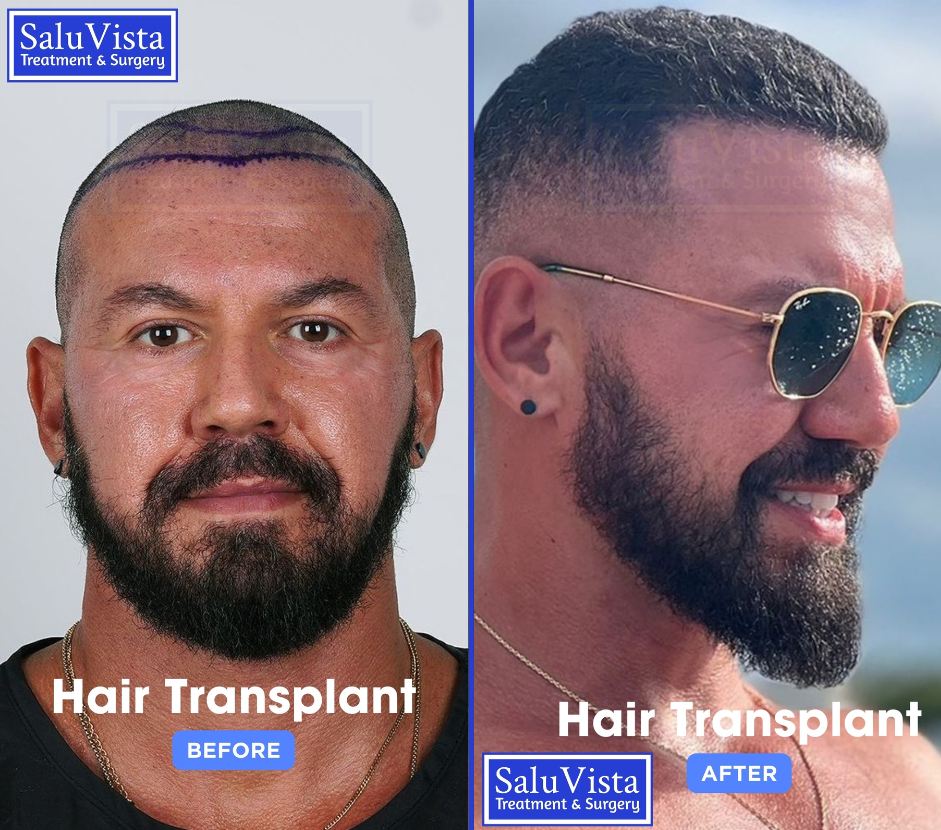
Wondering if a beard transplant is right for you?
Share a few photos and your goals. A specialist gives you an honest, personalised view. That includes telling you if you're not a candidate yet. You speak with your surgeon before booking anything.
Get a free assessment →Results timeline
Beard results build gradually, and understanding the phases helps you stay patient:
- Weeks 2–4: shedding. The transplanted hairs fall out while the follicles stay in place and enter a resting phase. This alarms people who don't expect it, but it's a normal part of the cycle.
- Months 3–6: early growth. New hairs start to emerge, often fine at first.
- Months 6–12: thickening. Most of the visible density comes through in this window, with the fullest result generally around the one-year mark.
The follicles are moved from a zone that's typically resistant to the hormone driving thinning. So established results tend to be long-lasting. But no outcome can be guaranteed, and results vary from person to person. We don't publish density percentages or success rates, because honest facial-hair outcomes depend on the individual.
Why patients choose Turkey — and how SaluVista works
Turkey, and Istanbul in particular, has become a leading destination for hair and beard restoration thanks to high procedure volumes, experienced surgical teams and all-inclusive pricing. SaluVista is an Istanbul-based medical-travel platform (an Orozan company) that connects international patients directly with board-certified surgeons.
Our hair and beard restoration is priced from £1,500 (approximately €1,750) for a single session with an unlimited number of grafts, all-inclusive. You talk to your surgeon before travelling, screening and booking happen in the app, and a qualified human makes the final decision on suitability. For a fuller breakdown of what's included, see our hair transplant cost guide, and if you're considering facial work more broadly, our eyebrow transplant guide covers the same technique applied to the brows.
Frequently asked questions
How does a beard transplant work?
A beard transplant moves individual hair follicles, usually from the back of the scalp, to the beard area using the FUE (follicular unit extraction) technique. Each follicle is placed one at a time to match the natural angle and direction of beard growth. Because the follicles are your own, once they settle they grow like normal beard hair and can be trimmed and shaved.
Am I a good candidate for a beard transplant?
Good candidates usually have patchy, thin or scarred beard areas and enough healthy donor hair on the scalp to move. You should be in good general health and have realistic expectations. A surgeon assesses your donor supply, skin and goals before confirming whether the procedure suits you; not everyone is a candidate, and an honest assessment is essential.
Is a beard transplant permanent?
The transplanted follicles are taken from areas that are typically resistant to the hormone that causes thinning, so once they establish they tend to be long-lasting. However, no outcome can be guaranteed and results vary from person to person. The transplanted hairs first shed within a few weeks, then regrow, with the fuller result usually visible around the one-year mark.
How long does it take to recover from a beard transplant?
Most people return to everyday activities within a few days. Small crusts around the grafts usually clear within about a week, and any redness settles over the following days. The transplanted hairs typically shed within two to four weeks before new growth begins. It is best to follow your surgeon's aftercare advice on washing, shaving and sun exposure.
When will I see the final beard result?
After the initial shedding, new hairs start to appear over the following months. Most of the growth comes through between about six and twelve months, with the fullest result generally seen around one year. Density and coverage develop gradually rather than all at once, so patience is part of the process.
Does a beard transplant leave scars?
The FUE technique used for beard transplants extracts follicles individually, which typically leaves tiny dot-like marks in the donor area rather than a linear scar. These usually fade and are generally hard to see once the surrounding hair grows. Your surgeon will explain what to expect for your skin and hair type.
This article is general information, not medical advice, and does not replace a consultation with a qualified doctor. Individual results and recommendations vary, and no outcome can be guaranteed. Always discuss your options and risks with a medical professional.
Sources & further reading
- NHS — Hair loss: causes and patterns of hair loss.
- ISHRS — International Society of Hair Restoration Surgery: professional standards and guidance for follicular-unit procedures.