Plastic surgery
Rhinoplasty recovery timeline: week by week
Medically reviewed by Dr. Mehmet Yılmaz
Quick answer
Rhinoplasty recovery has two speeds. The visible part is fast: the splint comes off around day seven, most bruising fades within two weeks, and by three to four weeks you usually look normal to other people. The slow part is the shape itself: deeper swelling settles over months, and the nose tip keeps refining for up to a year, sometimes longer.
- Day 7: splint (and any external stitches) usually removed.
- Weeks 1–2: bruising and the worst swelling fade, back to desk work for many.
- Weeks 3–6: you look "normal" day-to-day; gradual return to exercise.
- Months 3–12+: subtle tip swelling resolves; the final result settles.
In this guide
The most common surprise after a nose job isn't the first week. It's how long the last 10% takes. Rhinoplasty is one of the slowest-settling operations in plastic surgery, and knowing the honest timeline up front makes the wait far less stressful. This guide walks through recovery week by week, from splint removal to the final tip, so you can plan realistically and judge your own healing calmly.
It's general information to help you prepare, not medical advice.
Why recovery has two speeds
It helps to think of two separate clocks running at once.
The social recovery clock is quick. Within a few weeks the bruising clears, the obvious puffiness drops, and you can go about daily life without people noticing you've had surgery. This is the timeline most people care about when they book time off work.
The structural recovery clock is slow. The bones, cartilage and (most of all) the thin skin over the tip take months to fully deflate and re-drape. During this time the nose is genuinely changing shape, usually for the better, but slowly, which is why a surgeon will ask you not to judge your final result too early.
Rhinoplasty rewards patience. The nose you see at two weeks is not the nose you'll have at one year. And that's by design.
Week-by-week timeline
Days 1–3: the swollen, stuffy phase
Straight after surgery your nose is splinted and often has soft internal support. Expect a blocked, congested feeling, some oozing, and puffiness spreading to the cheeks and under the eyes. Most discomfort is more pressure and stuffiness than sharp pain. We cover this honestly in our guide to whether rhinoplasty hurts. Rest with your head elevated, even while sleeping, to limit swelling.
Days 4–7: the turning point
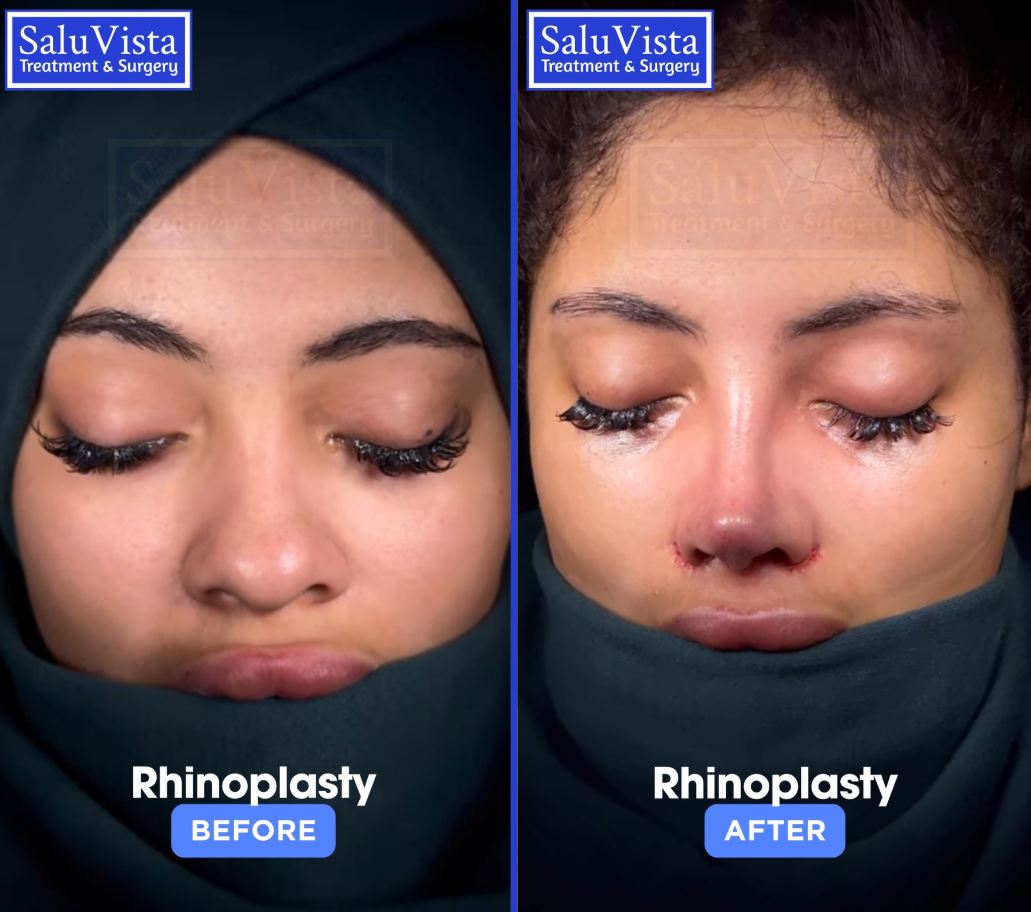
Bruising typically peaks and then starts to fade. Swelling begins to move in the right direction. Around day seven, the external splint (and any skin stitches) usually comes off. A genuine milestone. Your nose will look swollen and upturned at this point; that's expected, not the final shape.
Weeks 1–2: back into life
Most bruising resolves within two weeks, though some people conceal a little with make-up sooner. Many return to desk-based or remote work in this window. The nose is still visibly swollen, especially across the bridge and tip, and can feel numb, stiff and firm. Avoid glasses resting on the bridge, strenuous activity, and anything that risks a knock.
Weeks 3–6: looking "normal" to others
By around three to four weeks, most people look normal in everyday situations. Colleagues and acquaintances generally won't notice. Residual swelling is still there but subtle. Light exercise is usually reintroduced gradually in this period, with strenuous training, heavy lifting and contact activity held back longer on your surgeon's advice.
Months 2–3: the refinement begins
The bridge is often looking settled by now. The tip remains the slow zone. It can still feel firm and appear a touch swollen, particularly in the morning. Small day-to-day fluctuations are normal. Numbness continues to fade gradually.
Months 6–12+: the final result
This is where patience pays off. Fine swelling around the tip continues to resolve, definition sharpens, and the nose "finds" its finished shape. For most people the final result is judged at around twelve months; thicker skin and open-technique or revision cases can take twelve to eighteen months or a little longer.
Quick recovery snapshot
| Stage | What's happening | Typical milestone |
|---|---|---|
| Days 1–3 | Splint on, congestion, peak puffiness | Rest, head elevated |
| Days 4–7 | Bruising fades, swelling turns | Splint usually removed |
| Weeks 1–2 | Bruising mostly gone | Back to desk work for many |
| Weeks 3–6 | Look normal day-to-day | Gradual return to exercise |
| Months 2–3 | Bridge settles, tip still firm | Numbness easing |
| Months 6–12+ | Tip refines, shape finalises | Final result judged |
Swelling & the tip result
If one thing defines rhinoplasty recovery, it's tip swelling. The tip has the thickest soft tissue and the most delicate blood supply, so it's the last area to fully deflate; early on it can look bulbous or slightly upturned, and over months it drops, narrows and softens into its intended shape.
Two factors matter most here:
- Skin thickness. Thicker, oilier skin holds swelling longer and refines more slowly. Thinner skin settles faster but shows fine details sooner.
- Primary vs revision. A first-time (primary) rhinoplasty generally settles faster than a revision, where scar tissue slows the process.
This is exactly why reputable surgeons and bodies like the British Association of Aesthetic Plastic Surgeons (BAAPS) stress realistic expectations before surgery, not just after. A good surgeon may even advise a more conservative change, or against surgery altogether, if that serves you better.
Judge nothing at two weeks. The upturned, swollen, slightly stiff nose you see soon after surgery is a normal stage, not the outcome. Take standardised photos over the months so you can see slow progress you'd otherwise miss.
What helps (and slows) healing
You can't rush biology, but you can avoid getting in its way. General measures many surgeons recommend include:
- Keep your head elevated, including at night, in the first weeks to reduce swelling.
- Protect the nose from knocks, pressure and glasses resting on the bridge.
- Avoid strenuous exercise and heavy lifting until cleared, typically several weeks.
- Strict sun protection on the healing nose; UV can affect swelling and scars.
- Don't smoke. Smoking impairs healing and blood supply to the delicate tip.
- Follow after-care and follow-up precisely, and go to your reviews.
The NHS overview of cosmetic procedures is a sober reminder that every operation carries risk and recovery, and that aftercare is part of the result, not an afterthought.
When to call your surgeon
Slow, uneven, patient healing is normal. Some things, though, warrant prompt contact with your surgical team rather than waiting for a scheduled review:
- Fever, spreading redness, or increasing pain rather than steadily improving pain.
- Heavy or persistent bleeding.
- Pus, a bad smell, or a wound that opens.
- Sudden, marked or one-sided swelling.
- Any breathing change or symptom that worries you.
Because SaluVista patients speak with their surgeon before travelling and have structured follow-up, there's always a clear route to raise concerns. When in doubt, ask. That's what the aftercare pathway is for.
Planning your rhinoplasty recovery?
Share a few photos and your goals, and a specialist gives you an honest view of the technique, the realistic timeline, and whether surgery is right for you at all.
Ask on WhatsApp →Recovery when you travel for surgery
If you're having rhinoplasty abroad, the timeline shapes your trip. Most surgeons want the splint removed and an initial check done before you fly home, so plans typically allow around a week in Istanbul. Flying itself is usually fine after that early review, but you'll follow your surgeon's guidance on timing and cabin-pressure comfort with a congested nose.
At SaluVista, your rhinoplasty is led by board-certified plastic surgeons. For facial aesthetics and rhinoplasty, that includes Assoc. Prof. Emre G., an academic plastic surgeon. You speak with your surgeon before travelling, screening and booking happen in the app, and a qualified human makes the final decision on whether to proceed. For what the operation itself involves and how much it costs, see our guides to open vs closed rhinoplasty and rhinoplasty cost in Turkey.
On price: rhinoplasty at SaluVista starts from £3,045 (≈ €3,600), and revision rhinoplasty from £3,990. These are guide "from" prices only: your actual, itemised quote is confirmed after an individual assessment, never quoted as a flat figure before your surgeon has reviewed your case.
Frequently asked questions
How long does rhinoplasty recovery take?
The visible recovery is quick but the full result is slow. The splint comes off at about a week, most bruising fades within two weeks, and by three to four weeks you usually look presentable in everyday life. However, deeper swelling settles gradually over months, and the final shape of the tip can take up to a year — sometimes longer for thicker skin or revision surgery.
When can I go back to work after a nose job?
Many people return to desk-based or remote work after one to two weeks, once the splint is off and the worst bruising has faded. Jobs involving heavy lifting, strenuous activity or contact should wait longer, typically three to six weeks, and you should follow your surgeon's specific advice for your case.
When will my nose look normal after rhinoplasty?
To others, you often look normal in daily life by three to four weeks, once bruising and the most obvious swelling have gone. To your own eye, subtle swelling around the tip and bridge keeps changing for months. Most refinement happens in the first year, with the very final result settling over roughly twelve to eighteen months.
How long does swelling last after rhinoplasty?
Most obvious swelling subsides within the first few weeks, but low-level swelling — especially at the tip — resolves slowly over many months. The tip is usually the last area to fully settle. Thicker skin and revision procedures tend to hold swelling longer, which is why patience is part of the process.
When can I exercise again after rhinoplasty?
Light walking is encouraged early to aid circulation, but you should avoid strenuous exercise, heavy lifting and anything that raises blood pressure or risks a knock to the nose for several weeks. Many surgeons advise waiting around four to six weeks before returning to the gym, and longer for contact sports. Always confirm timings with your own surgeon.
Is it normal for the nose tip to feel hard or numb months later?
Yes. A firm, slightly numb or stiff tip is common for months after surgery as tissues heal and nerves recover. Sensation and softness usually return gradually over the first year. If you have concerns about how healing is progressing, raise them with your surgeon rather than waiting.
This article is general information, not medical advice, and does not replace a consultation with a qualified surgeon. Individual results, timelines and recommendations vary. Always discuss your options and risks with a medical professional.
Sources & further reading