Dental crowns in Turkey: a full 2026 guide
Quick answer
A dental crown is a custom cap. It protects a damaged, weakened or heavily restored tooth and restores its shape, strength and appearance, and in Turkey with SaluVista, zirconium crowns start from £190 / $255 per tooth (about €225), given as an itemised quote after assessment. A conservative dentist recommends a crown only when a smaller restoration won't do.
- Crown types: zirconia (metal-free, strong, natural-looking), porcelain-fused-to-metal, and full-porcelain, chosen per tooth.
- When you need one: after root canal, on cracked or heavily worn teeth, or when too little tooth remains for a filling.
- Price: zirconium crowns from £190 / $255 per tooth; your final quote is transparent and confirmed after an exam.
- Honest framing: crowns are durable but not permanent, and a good dentist protects healthy tooth structure first.
In this guide
A dental crown is one of the most common ways to save a tooth that's too far gone for a simple filling but still worth keeping. Fitted for the right reason, it hands a weakened tooth its strength back and looks like it was never touched, but fitted for the wrong one, it shaves away healthy tooth you don't get back. This guide walks through the crown types, when a crown is genuinely the right call, what the procedure and aftercare actually involve, and how pricing works in Turkey, where zirconia starts from £190 / $255 per tooth.
Think of it as background to help you prepare and ask sharper questions at your assessment, not a stand-in for one.
What a dental crown is
A crown (some people call it a "cap") is a custom-made cover that fits over the whole visible part of a tooth, right down to the gum line. It's shaped and shaded to match the teeth around it, then cemented into place. The bite feels normal again. A filling sits within the tooth and plugs a cavity; a crown wraps around whatever is left, which is why it comes into play when a large chunk of the tooth is missing, cracked or worn away.
The crown itself is made in a dental laboratory from materials picked for strength and looks, and the tooth underneath is trimmed first so the cover fits snugly. That trimming can't be undone. So crowning a tooth is a decision worth sitting with. The NHS guidance on healthy teeth and gums makes the same point from a different angle, putting prevention and keeping your own teeth healthy ahead of everything else.
When you actually need a crown
There's a short list of situations where a crown genuinely earns its place. Before reaching for one, a conservative dentist hunts for the least invasive fix. One that actually solves the problem.
Common reasons a crown is recommended
- Too little tooth left for a filling — when decay or an old restoration has removed so much structure that a filling wouldn't hold.
- After root canal treatment, particularly on back teeth, which can become brittle and benefit from the protection a crown provides.
- A cracked or fractured tooth, where a crown holds the tooth together and spreads the force of biting.
- Heavy wear or grinding that has shortened or weakened teeth.
- To restore a dental implant, where a crown is fitted onto the implant as the visible tooth.
When a crown may not be the answer
When a smaller restoration such as a filling, inlay or onlay can do the job, it's usually the better first move, because it keeps more of your natural tooth. The American Dental Association's MouthHealthy resource makes the same case: preserving your own tooth structure is what good dentistry is aiming at, so be wary of any plan that wants to crown a row of healthy teeth purely for looks. There are usually gentler cosmetic routes to the same result.
A good dentist protects healthy tooth structure. If a filling, inlay or onlay will do, that comes before a crown, and a full-mouth plan of crowns on sound teeth deserves a second opinion.
At SaluVista, dental care is led by experienced dentists including Dr. Zeynep Y., our prosthodontics lead for veneers, crowns and smile design, and you speak with your dentist before you travel, so the plan is built around what's actually in your mouth rather than a one-size template.
Types of crown compared
The big decision is the material. Each one trades off strength, appearance and cost differently. The best pick often changes tooth by tooth: a strong, metal-free zirconia crown suits a molar that soaks up heavy chewing, while a highly translucent porcelain flatters a front tooth that's on show all day.
| Material | Strengths | Best suited to |
|---|---|---|
| Zirconia (zirconium) | Very strong, metal-free, no dark gum line, natural look | Back and front teeth; people wanting a metal-free option |
| Full porcelain / ceramic | Excellent translucency and lifelike appearance | Highly visible front teeth |
| Porcelain-fused-to-metal (PFM) | Long track record, strong metal core | Some back teeth; established, budget-conscious cases |
| Metal / gold alloy | Extremely durable, gentle on opposing teeth | Out-of-sight molars where appearance matters least |
Zirconia is a popular SaluVista choice. It combines strength with a natural, metal-free finish. If you specifically want the detail on that material, such as shades, layering and where it shines, our dedicated guide to zirconia crowns in Turkey has it.
The procedure, step by step
A crown is normally spread over a few appointments. The lab builds your custom piece across them. Here's how a typical case tends to go.
- Assessment & planning. The dentist examines the tooth, often with X-rays, confirms a crown is the right option, and agrees the material and shade with you.
- Preparation. Under local anaesthetic, the tooth is shaped to make room for the crown. Any decay is removed first, and if the tooth needs building up, that's done now.
- Impressions or a digital scan. A precise record of the prepared tooth is taken so the crown fits exactly against your bite and neighbouring teeth.
- Temporary crown. A temporary is often placed to protect the tooth while the permanent crown is made.
- Fitting. At a later appointment the permanent crown is checked for fit, colour and bite, adjusted if needed, then cemented in place.
For patients flying in, those stages are usually squeezed into one trip of several days, timed so the preparation and the fitting both land while you're in Istanbul. The exceptions are complex cases, or work that needs healing time such as an implant sitting under the crown, which can call for a second visit. Your dentist pins down a realistic timeline once they've assessed your case. No fixed number of days, sight-unseen.
Cost in Turkey & what's included
At SaluVista, zirconium crowns start from £190 / $255 per tooth. That's roughly €225 at approximately £1 ≈ €1.18. Treat that as a starting point rather than a headline you'll pay flat. Your real cost lands in an itemised quote confirmed after your assessment, spelling out what each tooth and material comes to and what any extra treatment adds on top.
A handful of things move the final figure:
- Crown material — different ceramics and constructions carry different costs.
- Number of teeth — a single crown differs from a multi-tooth plan.
- Preparatory treatment — for example, root canal treatment or a build-up before the crown.
- Whether the crown sits on a natural tooth or an implant.
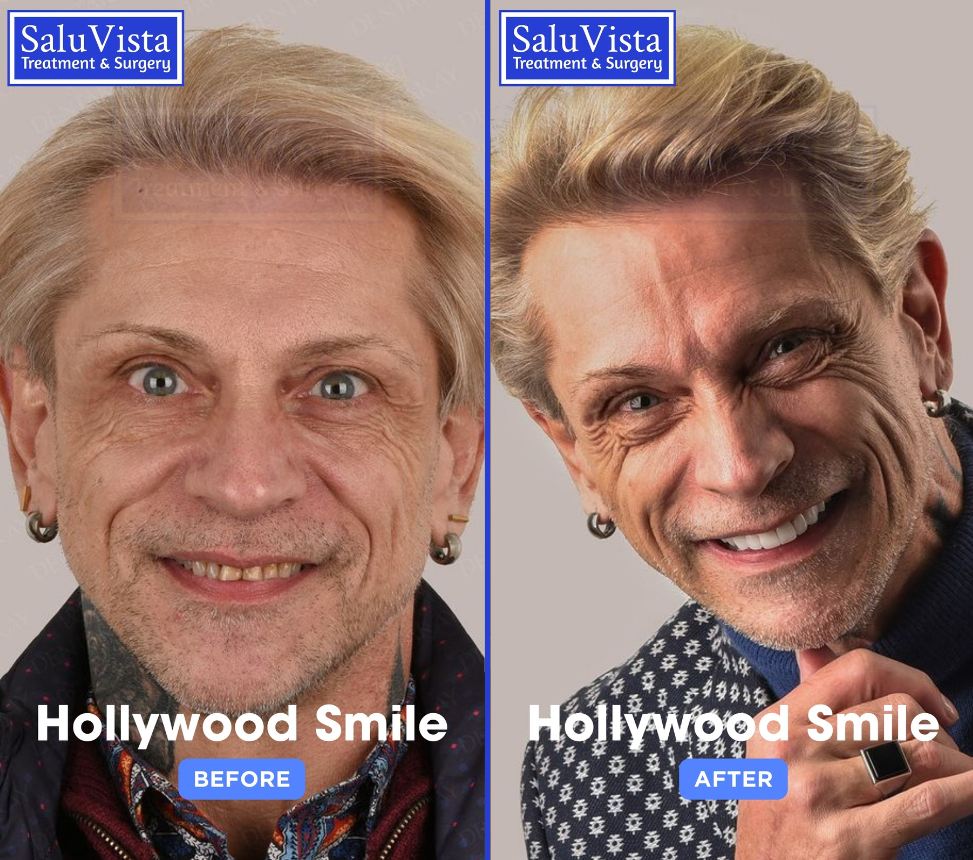
Crowns are just one item on a wider dental menu. For a sense of scale, at SaluVista veneers start from £320 / $430 per tooth, dental implants from £230 / $310 each, and a full Hollywood smile from £5,000 / $6,730 depending on the plan, each confirmed as an itemised quote after assessment. If your problem is replacing missing teeth rather than rebuilding damaged ones, our guide to dental bridges in Turkey weighs up the crown-and-bridge route. The full range sits on the SaluVista dental hub.
Never choose dental work on headline price alone. A transparent, itemised quote, from a dentist willing to explain why each tooth is being treated, matters more than the lowest number.
Want to know exactly which teeth need a crown — and what it would cost?
Share a few photos and your history. A SaluVista dentist gives you an honest, itemised assessment, including when a smaller, less invasive treatment would serve you better.
Get a free assessment →Caring for your crown
A crown shields the tooth, but the natural tooth and gum underneath still need looking after every day, and though the crown itself can't decay, the join at the gum line certainly can. Caring for a crown isn't complicated. It's the same steady oral hygiene you'd give any tooth.
- Brush twice a day with fluoride toothpaste and clean between your teeth daily.
- Keep routine dental check-ups so the crown, bite and gums are monitored over time.
- Protect against grinding — if you clench or grind, ask about a night guard, which can extend the life of crowns and natural teeth alike.
- Be sensible with very hard foods to avoid chipping or dislodging a crown.
How long a crown lasts comes down to the material, your bite, your gum health and your habits. Plenty of crowns run for years, and some go a decade or more with good care, but none of them is permanent or guaranteed to last forever, and honest dentistry says so out loud. If a crown ever feels loose or the bite sits high, flag it to your dentist. Sooner rather than later, especially if sensitivity lingers.
How treatment works with SaluVista
SaluVista is an Istanbul-based medical-travel platform (an Orozan company) that puts international patients in direct contact with experienced dentists in Turkey, and the whole process is built so the final clinical call is made by a qualified human, never an algorithm.
- Talk to your dentist first. You speak with your dentist before travelling, so the plan is agreed before you book flights.
- Screening and booking happen in the app. Your photos, history and quote are handled securely, with an itemised breakdown.
- A qualified dentist makes the final call. If a crown isn't the right or least invasive option, you'll be told.
Your crown work would be led by our prosthodontics team. Meet Dr. Zeynep Y. and the wider dental team before you commit to anything. Turkish dental care runs under its own regulatory framework; if you want a UK yardstick for how dental professionals are overseen, the General Dental Council is the UK regulator.